Gay London City Guide
First time in London? Then our gay London city guide page is for you
London is the most populous city and metropolitan area in the United Kingdom, with over 8 million residents. It is also the most visited city in the world.
London is a culturally diverse city with more than 300 spoken languages within its boundaries. The city is home to several World Heritage Sites, museums, theatres, galleries, events and huge sporting venues, attracting millions of visitors each year.
The city is also a hub for gay travelers, with its gay district Soho, being one of the largest and most vibrant in Europe. There is a wealth of LGBT+ culture and history for visitors to enjoy in this iconic and dynamic city.
Gay Rights in the UK
The death penalty for a homosexual act was removed in 1861, but it remained a criminal offence. It was not until 1967 that homosexual acts in private between consenting adults over the age of 21 were decriminalised. More recently the age of consent was reduced to 18 and then, in 2001, to 16. In 2007, new laws prohibited discrimination in the provision of goods and services on the grounds of sexual orientation.
Hotels are not permitted to discriminate on the basis of sexual orientation. By law, hotels and guest houses must welcome gay travellers in exactly the same way as straight travellers. In reality, hotels across the UK have warmly welcomed gay travellers for many years.
Recently, 'hate speech' and 'hate crimes' based on sexual orientation have been criminalised giving additional protection to the LGBTQ community. Legislation to allow same-sex marriage in England and Wales was passed by Parliament in July 2013 and came into force in 2014. Similar legislation was fast-tracked through the Scottish Parliament and came into force in 2014.
Gay Scene in London
London has a very open, vibrant and diverse gay scene with something for everyone. There are a huge number of lively gay bars, extraordinary nightclubs, steamy saunas, well-stocked gay shops and proud gay organisations. London has two main 'gay villages' located in Soho and Vauxhall.
The Soho gay area is located in the centre of the city, close to the Piccadilly Circus. Many of the venues are on or close to Rupert Street and Old Compton Street. You will find an excellent choice of gay bars and restaurants. Read More: The best gay bars in Soho.
The Vauxhall gay area is located south of the Thames River near Vauxhall Bridge. It is particularly well-known for late-night dance clubs.
However, there are many fabulous gay venues across the city, not just in these two areas.
London's annual Pride is one of the best in Europe, with more than 50,000 people taking to the streets. The 2016 parade was one of the biggest events held in central London and even featured a fly-past by the Royal Air Force Red Arrows display team.
Gay hotels in London
Depending on what you're looking for, London has a plethora of hotels and guesthouses suited for every taste and budget. Most hotels in London can be classed as gay-friendly, meaning guests shouldn't experience any unusual or unfair treatment as a result of their sexual or gender identity. Hotel staff tend to be welcoming and respectful of all guests.
Gay travellers looking to stay in the heart of London's gay centre should consider one of the many hotels that are situated in and around Soho. The Z hotel occupies a conversion of 12 Georgian townhouses and is no trendy designer hotel. Located near the popular Village Soho and Yard gay bar, it offers guests the perfect base to explore gay London.
London is also home to some of the world's most famous 5-star hotels, offering guests the chance to experience the capital in supreme comfort and luxury. Consider the W London or The Soho Hotel if you're travelling with a larger budget.
Visit the Gay London Luxury Hotels, Mid-Range Hotels and Budget Hotels pages to see our list of recommended hotels, to check prices and to make a reservation.
Gay saunas in London
There are plenty of gay saunas to enjoy in London. Most venues boast well-maintained facilities and membership is generally not required. However, if you look young, it's wise to bring a photo ID as these venues are for over 18s only.
One of the city's most popular venues is Sweatbox Sauna, a 24-hour gay sauna boasting a fully equipped gym, 40-man steam room and massage services. The venue is located near Oxford Circus tube station and is a popular destination after clubs close. Pleasuredome near Waterloo is also one of London's most popular gay saunas.
Due to a number of drug-related deaths in London's gay saunas, many venues will require visitors to be searched before the entrance. It is also generally unacceptable to bring your own drinks, including bottled water into saunas.
Gay culture in London
London is a treasure trove of LGBT+ landmarks, not only displaying the courage and pride of the city’s queer population but also its darker and more discreet history.
Throughout the city there a number of statues and monuments dedicated to London's LGBT+ pioneers and trailblazers. These include depictions of Alan Turing and Oscar Wilde. Travellers are also encouraged to visit some of the locations of iconic moments of triumph and tragedy for LGBT+ people in the city, including Highbury Fields, the location of the UK's first gay rights protest.
For the richest gay experience London has to offer, visitors should immerse themselves in the Soho area, this hub of queer culture is a globally recognised centre of gay history and art.
Read More: London's coolest neighbourhoods, London's gay landmarks.
Getting to London
London has the world's largest city airport system, comprising five international airports. The two main international "long-haul" airports are Heathrow and Gatwick. London Luton, London Stanstead, London Southend and London City Airports handle mostly European and domestic flights.
Heathrow
Heathrow is one of the busiest airports in the world. It has 4 terminals (numbered 2, 3, 4 and 5 - Terminal 1 is closed).
Heathrow is connected to the city by a fast rail link called the Heathrow Express. The journey takes 15 minutes non-stop to Paddington Station, located to the west of London's city centre and costs £37 for a single journey. From Paddington, it is easy to catch a Taxi or continue on the Underground to your destination. There is an alternative rail service to Paddington, called Heathrow Connect, that stops at a number of stations. It is cheaper (£10.20 for a single) but the journey time is 25 minutes.
The Piccadilly Underground Line runs from Heathrow through central London. It is cheaper (£6 to Zone 1) but slower than the Heathrow Express (it can take more than 1 hour to reach central London). During peak hours (7:30-9:30 and 17:00-19:00), it can be very difficult to travel with luggage on the Underground through central London.
Buses and 'Black Cab' taxis are available at Heathrow. TFL (Transport For London) estimate that a taxi will cost in the range of £46-87 to get into central London.
Gatwick
Gatwick has two terminals (North and South) and is used by a mix of European and long-haul airlines. Gatwick is connected to the city by a rail link called the Gatwick Express. This is a 30-minute non-stop service to Victoria Station located in the South West of London's city centre. Prices do vary. From Victoria, you can catch a taxi, bus or underground line to your destination.
Taxis and bus services are also available at Gatwick. Taxis can be expensive if caught on the day. But if you pre-order one, you're likely to get a better deal for travel to central London.
Getting around London
By underground/metro (also known as 'The Tube')
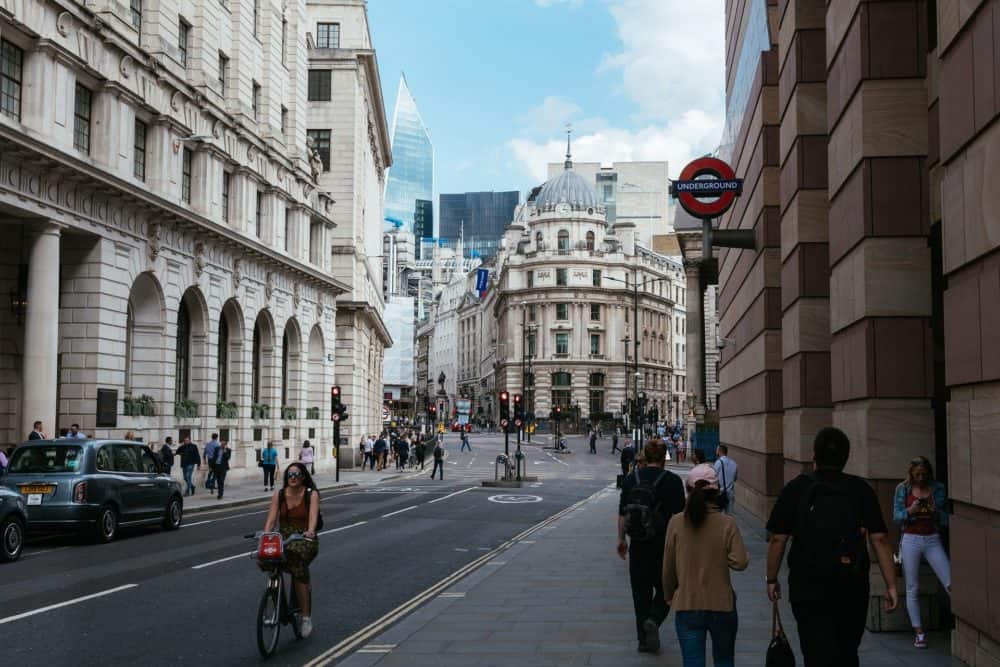
London has an extensive underground metro system. It is the fastest way to travel around the city. The underground network is made up of different 'lines'. Each line has its own name such as 'Victoria Line', 'Piccadilly Line', and 'Jubilee Line'. Trains operate from around 5 am to 1 am. From August 2016 some lines started to operate throughout Friday and Saturday nights.
The underground network is zoned. Ticket prices are based on the zone from which you start your journey and the zone that you finish, regardless of how many lines or stations you use.
Tickets are available for individual journeys but using an Oyster Card or Travelcard is much cheaper (see below).
By bus
London bus network is modern, safe and easy to use. Bus routes are numbered. Each bus displays a route number of the front so you know where the bus is going. Every bus stop has a map showing the routes that the bus will follow.
Buses don't accept cash. You will need to pay for a journey with an Oyster Card, contactless debit or credit card or Travel Card. Buses typically operate from 6 am to midnight. Some popular routes operate throughout the night. These are called 'Night Buses'.
By taxi
Iconic 'Black Cabs' can be found everywhere in London. Drivers are knowledgeable and honest. All journeys are priced using a meter. Using a taxi is an easy way to travel around London but usually the most expensive.
You can book a 'mini-cab' for a specific journey. 'Mini-cabs' are licensed private cars. You should agree on a price for the journey at the time you make a booking. Many late-night bars and nightclubs operate a mini-cab service to help customers get home.
Minicab drivers are not allowed to pick up customers on the street. If you are approached by someone offering a mini-cab service, refuse. Uber is also very popular in London and is widely used.
On Foot
Many of London's most popular attractions and shops are within easy walking distance. This can be the best way and cheapest way to explore the city, particularly during the summer months.
Visitor Oyster Cards / TravelCards / Contact-less payment
We strongly recommend purchasing an Oyster Card or TravelCard or using a contactless credit or debit card. These options are easy to use and cheaper than single tickets.
An Oyster Card is pre-loaded with credit that can be used on the Underground, buses and some railway lines. You're guaranteed the cheapest fare for each journey. You can 'top-up' your Oyster Card at all Underground stations. You can buy a Visitors Oyster card online before you travel to the UK or buy a standard Oyster Card at any Underground station.
A Travelcard is a paper ticket that is valid for 1 or 7 days of unlimited travel on the Underground and buses within specific zones. Most visitors to London will only require Zones 1 and 2. You can purchase a TravelCard at any Underground Station and start from £12.
If you have a credit or debit contactless card, then simply use this to get the best fares. Simply tap in and tap out at every station (make sure you use the same card).
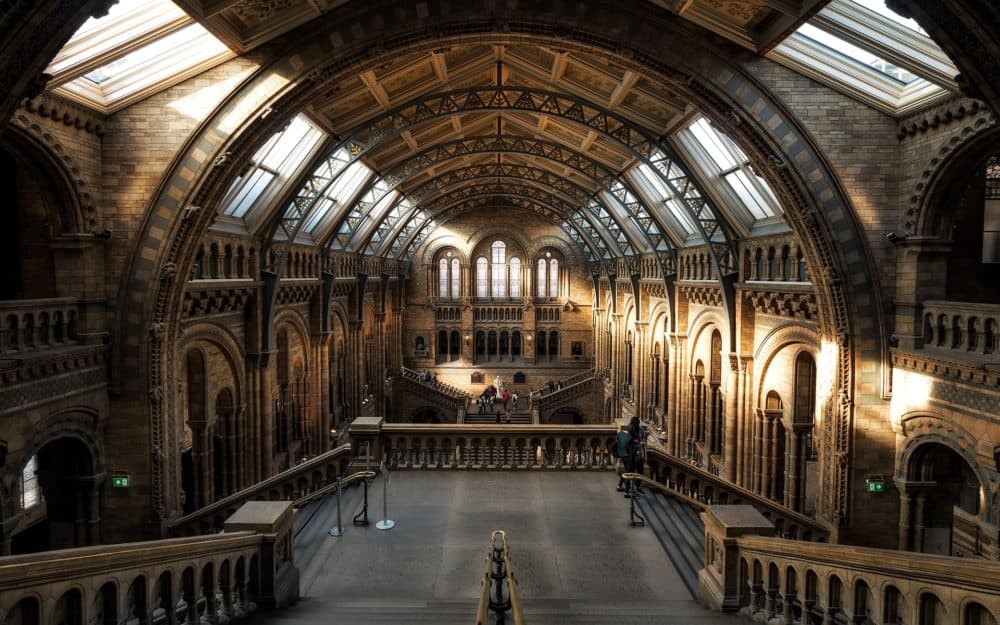
Things to do in London
There are endless possibilities when it comes to things to do in London. However, the most worthwhile attractions include:
- Observe royalty at Buckingham Palace
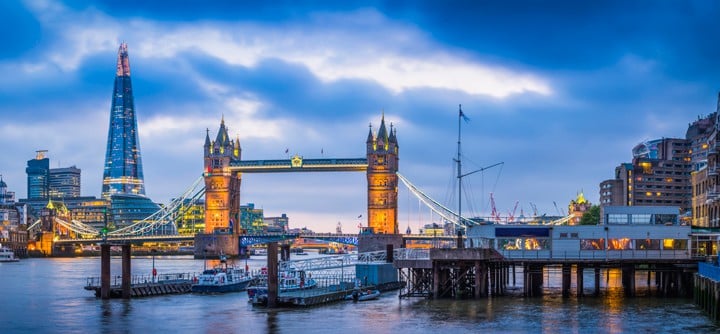
- See the Thames from Tower Bridge
- Wander the grounds of Hyde Park
- Discover the British Museum
- Observe the stunning views from the Sky Garden
- Watch a musical in London's West End
- Shop on Oxford Street
- Explore The South Bank
For information on the best attractions in London, visit the Gay London Attractions page.
FAQs
When to Visit
The UK has four seasons - Winter (November-March / cold and wet), Spring (April-June / mild), Summer (July-September / hot and dry) and Autumn (October-November / cool and wet).
Generally speaking, from a weather perspective, the best time to visit the UK is from April until the end of September, though Christmas can be utterly magical too as London dons a plethora of festive lights through its main shopping heartlands such as Regent Street, Oxford Street and Covent Garden.
Visa
In recent years, the UK has tightened its immigration procedures and introduced the use of biometrics. Full details can be found here.
Most visitors from Europe and countries such as the USA, Hong Kong SAR, Singapore and Taiwan do not require a visa - check here to see if this applies to you.
Most other visitors from Asia, South Africa and South America need to obtain a visa before travelling to the UK. You will normally be required to attend an interview at your local UK Embassy.
Entry is normally permitted for a period of 6 months, and you are free to travel anywhere in England, Wales, Scotland and Northern Ireland. A UK visa is not valid for travel to other European countries.
Money
The official currency of the United Kingdom is the pound sterling (£, GBP), commonly known simply as the pound.
Exchanging cash into British Pounds in the UK can be expensive. Most travellers get a better rate by exchanging currency before travelling to the UK.
Visa & MasterCard and debit cards are accepted almost everywhere. American Express and Diners cards are widely accepted. The UK uses a 'Chip and PIN' system for all payments. If your card has a microchip, expect to be asked to enter your PIN number rather than sign. If you do not have a PIN, expect to be asked to show an official photo ID.
Banks usually open between 09:30 and 16:00, although many in larger cities or major shopping areas will stay open a lot later.
Shopping Hours
Shops in London are generally open from 10 am to at least 6 pm. Large department stores and shopping malls stay open a lot later. Shops are only permitted to open for 6 hours on a Sunday (most open between 11 am-5 pm).
Phones and Internet
UK mobile phone networks use the GSM system. 4G and 5G services are available everywhere in London and across most of the UK. Using a non-EU mobile phone in the UK can be expensive. We recommend purchasing a 'pay-as-you-go' SIM card.
Health Care
The UK has a modern medical infrastructure. You will always receive medical assistance in an emergency. If you have a medical emergency, use any phone and dial 999. If you have a medical problem that is not an emergency then dial 111.
Medical treatment can be expensive so travel insurance is essential.
Pharmacies can provide a limited amount of advice and sell some drugs over the counter. Prescriptions issued by a UK doctor will be required for other drugs. There are a number of 24-hour private doctors' clinics that will see people on a 'walk-in' basis.
Tipping
A tip of 10%-12.5% will be expected in a restaurant. Always check to see whether a 'service charge' has been added to the bill. If so, no additional tip is required.
Taxi drivers will expect a small tip of up to 10%. In a bar or club, leaving a small tip may help you get noticed and served faster the next time you buy drinks.
Emergency Contacts
Use any phone to dial 999 for the police, fire service or in case of a serious medical emergency. You can use any mobile phone to make a 999 call free of charge. Do not use the 999 services for any other purpose.
Recreational drugs
The use of recreational drugs in the UK is illegal. In reality, many people take illegal drugs at dance parties.
We strongly advise against the use of all illegal drugs. In particular, we strongly advise against the use of a liquid drug known as 'G' (GHB or GBL). There are very real risks with this drug. As it is a liquid, it is very difficult to know how much to take. You will not know how your body will react.
If you take too little, the drug will have no effect. If you take too much, then you will vomit and may pass out. There have been many deaths as a result of accidental 'G' overdose.
Expect to be searched on the way into parties and, in particular, gay saunas.
Join the Travel Gay Newsletter


Have we got something wrong?
Are we missing a new venue or has a business closed? Or has something changed and we have not yet updated our pages? Please use this form to let us know. We really appreciate your feedback.